Some coastal ships suspended over illegal cargo

87
Htet Nadi/Pearl (NP News)-Mar 16
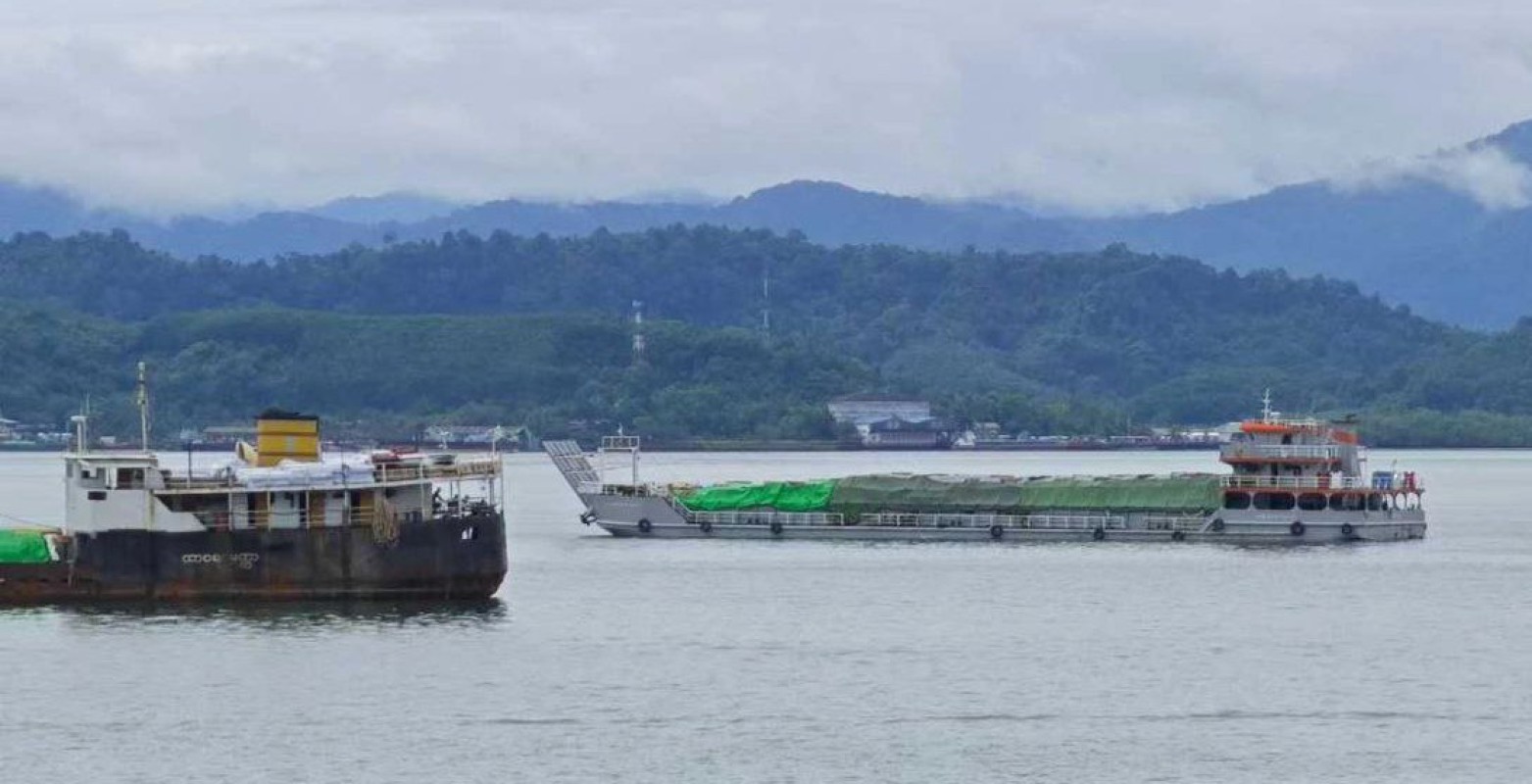
A source familiar with coastal shipping told The Statesman Journal that some ships have been suspended due to carrying illegal cargo.
There are 261 coastal vessels, some of which have been suspended for about four months due to illegal cargo, and are currently being resolved.
“Many merchants did not understand maritime trade and the laws. When they did not understand, there were many problems between merchants and ship owners. Merchants did not provide the lists to be loaded on the ship, and so, illegal goods were brought in. Some ships have been stopped for about four months. Now we are working to settle this issue. We have to pay a fine,” he said.
Among the three transportation sectors, maritime transport is the least expensive compared to other transportation modes, and if traders, relevant departments, and organizations can work together in a systematic and balanced manner, the state will not only receive taxes but also be able to control illegal goods.
“The main thing is that merchants are important. Inexperienced merchants think that they don't need to care much about issued rules and regulations, and that leads to problems. That is why it is also necessary to be skilled when loading cargo on ships. The relevant companies need to have the specified licenses and certificates. At the beginning, the companies that loaded the cargo did not have licenses or certificates. They mixed things up and there were many problems. Now, although these are handled systematically, there are still some requirements. It is better than before. If they work together, the state will also receive more taxes. Illegal goods will also decrease and prices will be lower. They are continuously working to meet the requirements,” he said.
Last February, 55 coastal ships traded on the Yangon-Ranong-Yangon, Yangon-Kawthaung-Yangon, and Yangon-Myeik-Yangon routes.
Main exports included marine products, agricultural produce, and CMP-processed textiles, while consumer goods and pharmaceuticals were the most imported.
“Trade is gradually stabilizing now. There are certain regulations depending on state’s income and policies. We are following these rules. In February, there were 19 ships coming to Yangon from Yangon-Kawthaung route. There were 8 ships leaving Yangon. There were 27 ships in total. There were 11 ships coming to Yangon from Yangon-Myeik route and 12 ships leaving Yangon. In Yangon-Ranong normal trade route, two ships entered Yangon from Ranong and three ships left Yangon for Ranong, totaling five ships. This includes container ships. We are trying to start. The tonnage depends on the ship and cannot exceed the deadweight tonnage specified by DMA. The inspection teams are always checking,” he said.
Similarly, 55 coastal ships were used to trade on the Yangon-Sittwe-Yangon and Yangon-Kyaukphyu-Yangon routes last month.
“Rakhine route also runs regularly. Ships leave for Sittwe, Munaung, and Kyaukphyu. Last month, there were six ships from Yangon to Sittwe, and two ships from Kyaukphyu. There was no ship going to Munaung last month. It’s convenient to go there too. There’s no difficulty. The main cargo is consumer goods,” he said. –