Myeik fish auction market project set to launch before government transition

148
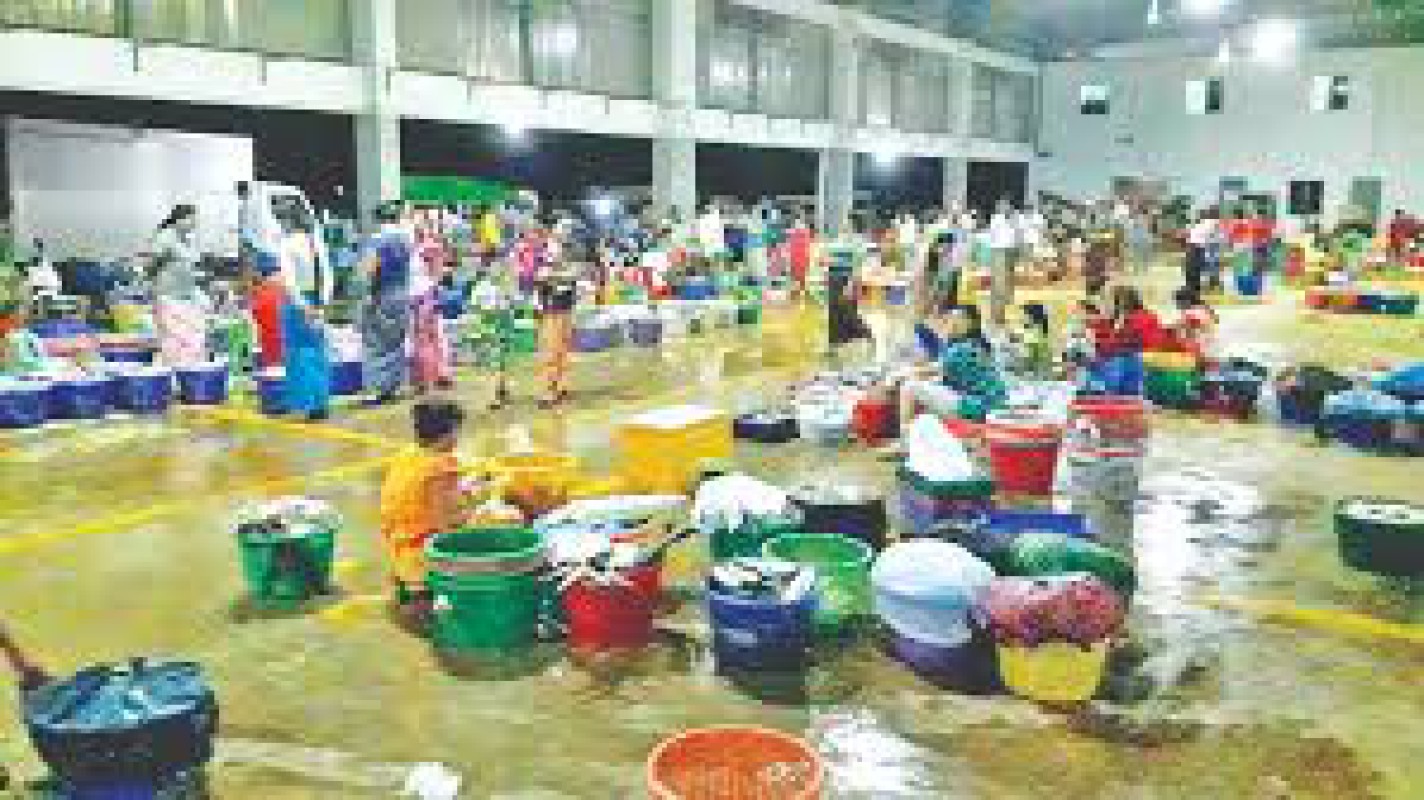
Htet Nadi/Pearl (NP News) - Feb 14
A source close to the Myeik Public Corporation Limited (MPC) told The Statesman that the construction work for the fish auction market project is likely to begin before the change of government.
In 2023, the Tanintharyi Regional Government and MPC signed a Memorandum of Understanding to conduct a feasibility study to develop an international-level fish auction market and industrial zone project in Sandawut Village Tract, Myeik Township, Tanintharyi Region. The study and feasibility study have been conducted, and the land for the project has been agreed in principle.
“Now, the land issues are being submitted to the Ministry of Transport. If the land rights are granted, then we can start implementing. Right now, the land rights conditions are still being submitted. In principle, it has been approved. Below, there are some things that need to be done by the ministry. Only after the land issues are resolved can we do it. The ministries have reported what they have asked us to do,” he said.
It is reported that the project will take approximately eight years to build, and that land issues and project construction permits will likely be implemented before the current change of government.
"We have a lot to do during this government's term, both in land issues and project construction permits. We will build the project in four phases. The construction period is estimated to be eight years," he said.
The project area is 659.53 acres and could cost over 260,000 million Myanmar kyats. If implemented, the project could create many local jobs and generate more foreign income and taxes for the state treasury.
“There will be more job opportunities in the region. We will be able to store our products properly. As we don't need to sell at discounted prices, we will be able to move from a buyer's market to a seller’s market. Tanintharyi Region’s water resource output is over [US$} 300 million. National output stands at 725 million, while Yangon’s output is 300 million. The remaining regions and states produce over 100 million,” he said.