Gloss and Glory: Myanmar’s Lacquerware Tradition

89
By Hsu (NP News) - March 11
A Craft That Shines Through Centuries
Step into a workshop in Bagan, and you’ll hear the quiet rhythm of tradition—the scrape of bamboo being shaped, the soft brush of resin applied, and the patient silence as artisans wait for each layer to dry. This is the world of Myanmar lacquerware, known locally as Yun-de, a craft that has dazzled kings, monks, and travelers for centuries. Today, it continues to inspire not only for its beauty but for the story it tells: of patience, resilience, and artistry woven into everyday life.
The Inspiration Behind the Shine
What makes lacquerware so inspiring? It is the way ordinary materials—bamboo, horsehair, wood—are transformed into extraordinary objects through sheer human devotion. Each piece requires weeks, sometimes months, of careful layering and polishing. The designs, often etched with Buddhist motifs or mythical creatures, are not just decoration but reflections of Myanmar’s spiritual and cultural soul.
In a world of fast fashion and mass production, lacquerware whispers a different message: beauty takes time. It is this timeless philosophy that resonates with international admirers, who see in lacquerware a reminder of the value of craftsmanship and tradition.
The Art of Making Lacquerware
The process begins with the sap of the thit-si tree, a resin unique to Myanmar. This natural lacquer is applied to a base—woven bamboo or carved wood—chosen for its durability and lightness.
• Building the base: Bamboo strips are woven into bowls, boxes, or trays.
• Layering lacquer: Resin is brushed on, layer after layer, each coat drying in cool, dust-free rooms.
• Polishing: Surfaces are smoothed to perfection.
• Decorating: Using the yun technique, artisans etch designs into the lacquer and fill them with pigments—reds, greens, yellows, and gold.
• Sealing: Final coats lock in the brilliance, ensuring the piece lasts for decades.
The patience required is immense, but the result is a glossy, durable work of art that carries the fingerprints of tradition.
A Kaleidoscope of Products
Myanmar lacquerware is as versatile as it is beautiful.
• Household treasures: Bowls, trays, plates, and cups that elevate daily life.
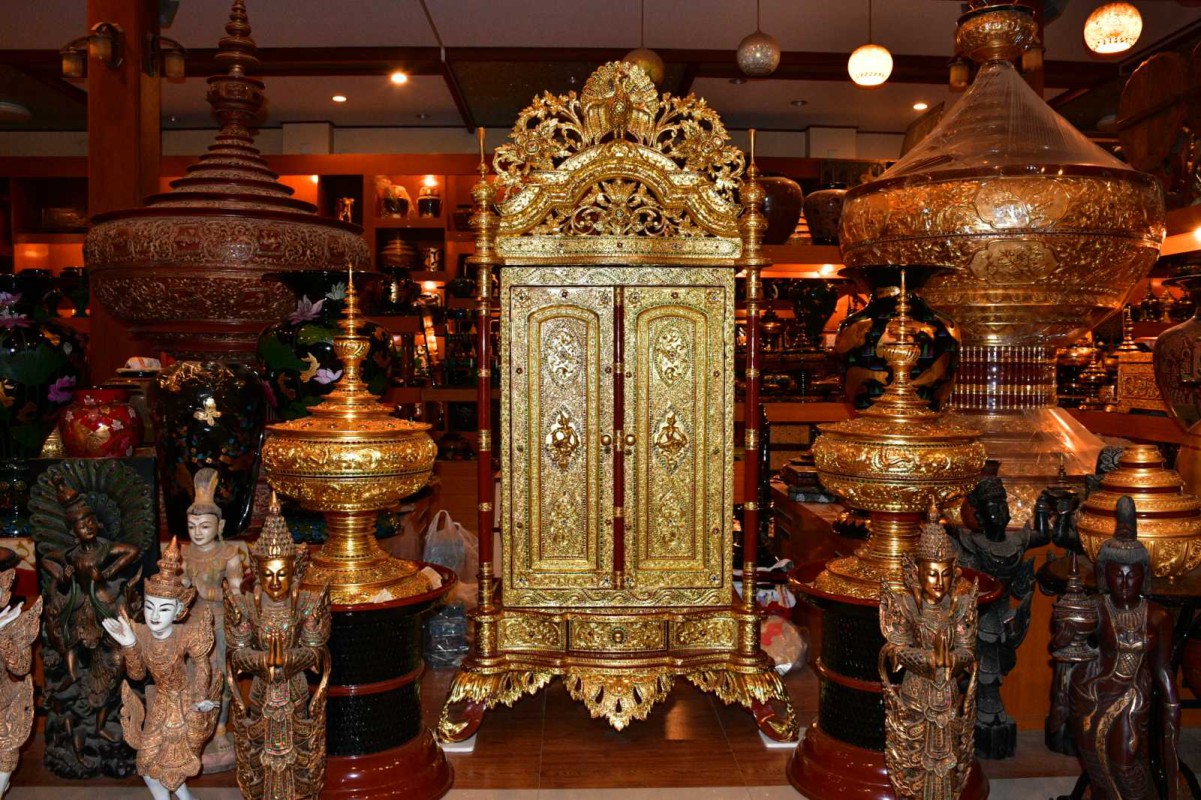
• Ceremonial icons: The hsun-ok, a tall offering vessel used in Buddhist rituals, remains one of the most iconic pieces.
• Decorative delights: Betel boxes, vases, and figurines, often adorned with intricate storytelling motifs.
• Modern twists: Jewelry, coasters, and accessories designed for global tastes.
Whether displayed in a temple or a modern apartment in Paris, lacquerware adapts effortlessly, proving that tradition can be timeless.
Where to Find Lacquerware
For travelers, Bagan is the beating heart of lacquerware. Family-run workshops welcome visitors to witness the craft firsthand, often allowing them to try their hand at simple designs. Yangon and Mandalay also boast artisan shops and galleries, where lacquerware is presented as both cultural heritage and fine art.
Internationally, lacquerware is finding its way into boutique stores, online platforms, and cultural exhibitions. Collectors in Europe and North America prize authentic Myanmar pieces, while trade fairs showcase lacquerware as a luxury handicraft. As Myanmar strengthens its tourism and export networks, lacquerware is poised to shine on the global stage.
More Than Art: A Lifeline for
Communities
Behind every lacquer bowl or box lies a story of livelihood. Entire villages in central Myanmar depend on lacquerware production.
• Jobs and income: Workshops employ artisans, apprentices, and traders.
• Generational knowledge: Skills are passed down, preserving cultural continuity.
• Tourism boost: Visitors purchasing lacquerware directly support local economies.
• Women’s empowerment: Many cooperatives involve women, giving them financial independence and recognition.
For these communities, lacquerware is not just art—it is survival, dignity, and pride. Promoting lacquerware internationally means sustaining thousands of families who keep this tradition alive.
Tradition Meets Tomorrow
The challenge now is balancing preservation with innovation. Younger artisans are experimenting with contemporary designs, blending traditional motifs with modern aesthetics. Export markets demand fresh ideas, and Myanmar’s lacquerware industry is responding with creativity while staying true to its roots.
Museums and design houses abroad are beginning to feature Myanmar lacquerware, recognizing it as one of the world’s great handicrafts. With proper support, lacquerware can become a cultural ambassador, symbolizing Myanmar’s artistry and resilience in the global arena.
A Glossy Future
Myanmar lacquerware is more than a souvenir—it is a story. A story of patience, of artistry, of communities sustained by tradition. It inspires because it embodies values the modern world often forgets: time, devotion, and beauty born of human hands.
For international audiences, owning a piece of lacquerware is not just acquiring an object—it is embracing a heritage that has endured for centuries. In every glossy surface and intricate design lies the soul of Myanmar, inviting the world to celebrate its timeless beauty.