World-ranked Naypyidaw Paw San rice to expand cultivation to 400 acres

81
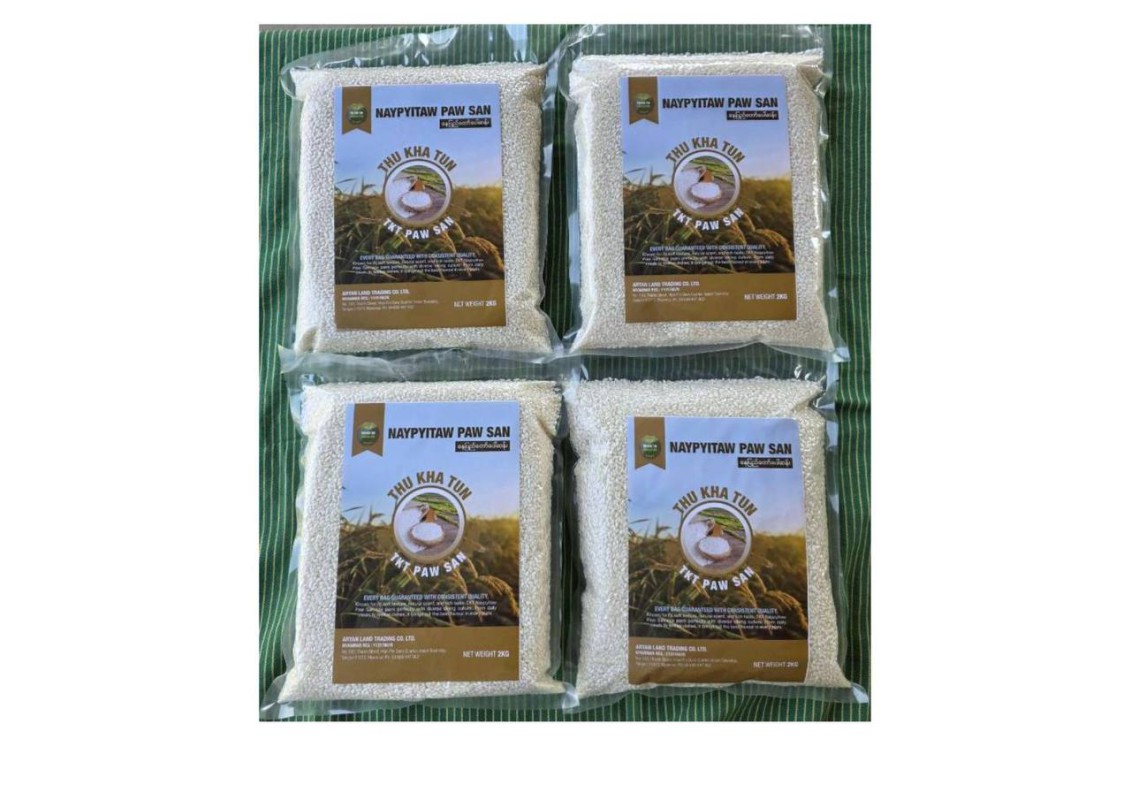
Hsu/Pearl (NP News) - March 26
A representative from Sukhathun Agricultural Enterprise told The Statesman that the award-winning Naypyidaw Paw San rice variety will be expanded to cover 400 acres.
In Thanatpin Seik village, Pyinmana Township in the Naypyidaw Council Territory, seeds of the Pathein Paw San variety were procured and experimentally cultivated on three acres in July 2025 under the supervision of officials from Yezin Agricultural University. The crop was harvested in late December, and the rice subsequently underwent laboratory testing.
According to the test results, this rice variety offers several advantages. It has a low fat content, which gives it a long shelf life and keeps it stable both uncooked and cooked without spoiling. Its high sodium level allows it to cook more quickly while enhancing the taste. The rice is also high in fiber, supporting digestion, lowering cholesterol, regulating blood sugar to reduce the risk of diabetes, and promoting a longer feeling of fullness even with smaller portions. In addition, it is rich in protein and iron, contains no toxins, has low moisture content, and is highly nutritious.
The official also added, “Our tests confirm this is the world’s finest rice, proven across 13 key metrics. Its protein content even surpasses the global benchmark. One milk tin of uncooked rice yields four milk tins of fluffy, perfectly risen cooked rice. The texture is delightfully soft, like tender jelly cubes, and it stays fresh without spoiling—even after two days. Due to these exceptional qualities, demand far outstripped our initial three-acre planting. We grew it entirely organically, harvesting around 200 baskets. I originally named it Sukhathun Paw San, but at the request of the Naypyidaw Council Chairman, we incorporated ‘Naypyidaw’—and so it became Naypyidaw Paw San.”
From the three-acre plot, approximately 200 baskets were harvested, and the rice is currently being sold at around 12,000 kyats per 2-kg pack.
The official added: “We grew it organically. Being our first time, we faced many challenges. We caught around 100 rats, but they still destroyed more than half the crop—I realized too late and had to set traps. Birds like sparrows also caused damage; we managed to catch about 300 of them. It should have yielded around 400 baskets, but we only got 200. Locally, it sells for 12,000 kyats per pack, while abroad it fetches about 25,000 kyats.”
There are plans to expand cultivation to 50 acres in the next fiscal year, with a gradual increase to 400 acres in the coming years.
"We plan to rent additional land next year to expand our operations. So far, we've secured 10 acres, but if planting goes ahead as hoped, I intend to cultivate up to 400 acres. Land rental remains a challenge, though. For next year, we're targeting 50 acres. If we harvest 1,000 baskets, we'll sell 500 domestically and export the other 500—exports yield higher profits. We'll expand gradually each year. Mobilizing farmers is also proving difficult. Currently, we rent land at 1.2 million kyats per acre annually and grow three crops per year," he said. –